Understanding the Difference Between Fixed and Variable Interest Rates

David Sterling
Managing Editor, Borrowing · Updated October 2026
David Sterling
Managing Editor, Borrowing · Updated October 2026
Imagine it is early 2026, and you have just secured a $15,000 personal loan to consolidate some high-interest credit card debt. You chose what seemed like the smartest option at the time, but six months later, the Federal Reserve shifts its stance on inflation. Suddenly, your monthly payment has jumped by $45, and you are left wondering if you made a massive financial misstep. This scenario is increasingly common as we navigate the economic volatility of 2026.
The choice between a fixed-rate loan and a variable-rate loan is perhaps the most consequential decision a borrower makes during the application process. A fixed rate offers a sense of security, while a variable rate promises potential savings in a declining interest rate environment. However, neither option is inherently 'better'; they are simply different tools designed for different financial climates. In this guide, we will break down exactly how these two structures function so you can make an informed decision based on your specific budget and risk tolerance.
As of 2026, the landscape for personal loans remains dynamic. While some lenders may offer fixed APRs as low as 6% for borrowers with exceptional credit, others might provide variable rates that start even lower but carry significant upward potential. Statistics from recent market reports suggest that nearly 30% of consumer debt products currently utilize adjustable structures to protect lenders against inflation. Understanding this nuance is key to protecting your long-term financial health.
By the end of this article, you will understand how to calculate your potential costs, recognize the red flags in loan contracts, and apply a decision framework that aligns with your 2026 financial goals. Whether you are looking for absolute certainty or hoping to capitalize on falling rates, knowing the mechanics behind these numbers is your best defense.
A fixed-rate loan is characterized by its stability. When you sign a contract for a fixed-rate personal loan, the interest rate stays exactly the same from the first payment to the last. This means your monthly principal and interest payment is locked in, regardless of what happens to the economy or the Federal Reserve's monetary policy in 2026.
For many borrowers, this predictability is worth a slightly higher initial interest rate. You are essentially paying a small premium for 'insurance' against rising rates. If you have a strict monthly budget and cannot afford any fluctuations in your outgoing cash flow, the fixed-rate model is often the safest harbor. It eliminates the mental load of tracking market trends to see if your next payment will be higher than the last.
Consider this example: A borrower takes out a $10,000 loan at a 9% fixed APR over a 36-month term. Their monthly payment will remain approximately $318 every single month for three years. No matter how much inflation spikes or how many times the central bank raises rates, that $318 figure is your constant reality.
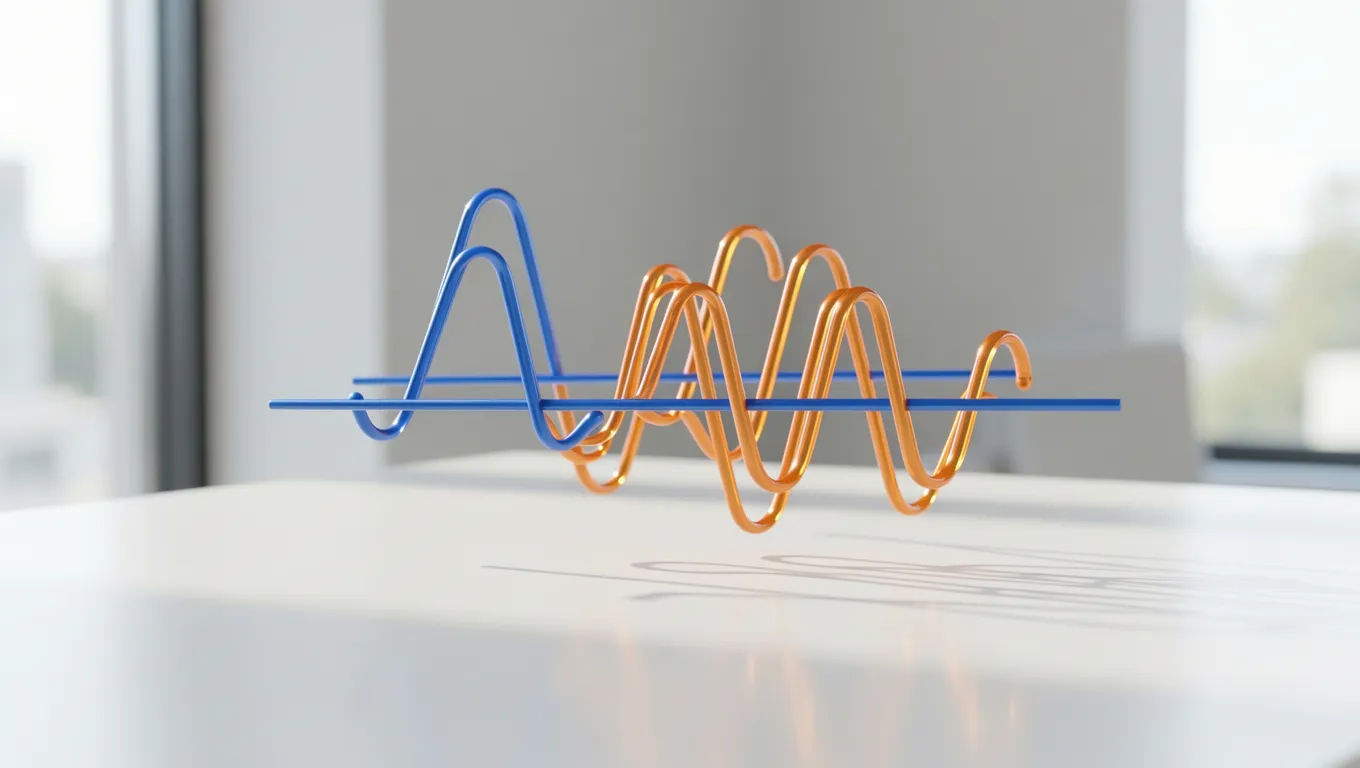
Variable interest rates, often referred to as floating rates, are a different beast entirely. These rates are tied to an underlying index, such as the Secured Overnight Financing Rate (SOFR) or the Prime Rate. When the index moves up or down due to central bank policy, your loan's interest rate moves with it.
In 2026, understanding this connection is vital. If you choose a variable rate, you are essentially making a bet on the direction of the economy. If inflation cools and the Federal Reserve lowers rates, your monthly payment could decrease, saving you hundreds or even thousands of dollars over the life of the loan. However, if the opposite happens, your costs will climb.
Most variable loans come with certain protections called 'caps.' For instance, a loan might have a 2% annual cap and a 5% lifetime cap. This means that while your rate can change, it cannot exceed a specific limit set in your contract. Always check for these caps before signing, as they are the only thing standing between you and an unmanageable payment spike.
To truly grasp the difference, we need to look at the actual math. Let's compare two borrowers in 2026 who both need $15,000 for home improvements.
Borrower A chooses a fixed-rate loan at 8% APR for 48 months. Their monthly payment is roughly $366. Over the full term, they will pay approximately $2,570 in total interest. This amount never changes, providing absolute clarity for their long-term planning.
Borrower B chooses a variable-rate loan that starts at 6% APR for 48 months. In the first year, their payment is roughly $350, and they are paying less interest than Borrower A. However, if economic conditions in late 2026 cause the rate to climb to 10%, their monthly payment could jump to approximately $377. While this seems like a small increase, over several years, that delta can add up significantly.
Choosing between these two options is essentially a trade-off between certainty and opportunity. There is no mathematical 'correct' answer, only the one that fits your personal financial profile at this moment in 2026.
The fixed-rate strategy is for the risk-averse. It is ideal for someone who has a stable income but limited disposable cash flow. If an unexpected $50 increase in a loan payment would cause you to miss other bills, then the 'insurance premium' of a fixed rate is a wise investment.
The variable-rate strategy is for the opportunistic or the short-term borrower. If you plan to pay off your loan very quickly—perhaps within 12 to 18 months—the lower starting rate of a variable loan might save you money before any major market shifts can take effect. It is also a play for those who believe interest rates will trend downward in the coming year.
The most significant danger with variable-rate loans is what economists call 'payment shock.' This occurs when an interest rate hike causes your monthly obligation to increase so sharply that it disrupts your entire household budget. Never take on a variable rate if you cannot afford the maximum possible payment allowed by the loan's cap.
Many borrowers fall into this trap because they only look at the 'teaser' or starting APR. They see 5.9% and compare it to a fixed rate of 7.5%, feeling they have made a great deal. However, they fail to account for the fact that the variable rate could eventually reach 12% or higher if the market shifts aggressively. In 2026, with global economic factors remaining unpredictable, this is a risk worth calculating carefully.
To avoid this, I recommend performing a 'stress test' on your budget. Take the maximum possible interest rate allowed by your loan contract and calculate what your monthly payment would be at that level. If that number makes you uncomfortable, the variable option may not be for you.
If you are sitting there today trying to decide which path to take, follow this three-step decision framework:
One final nuance that often confuses borrowers is the distinction between the base interest rate and the Annual Percentage Rate (APR). This is especially important when comparing fixed versus variable options.
The base interest rate is the actual percentage used to calculate the daily interest on your principal. The APR, however, includes not just the interest, but also any origination fees or closing costs associated with the loan. In a variable-rate scenario, as the base rate moves, the APR will move in tandem.
When you are comparing offers from different lenders, always use the APR as your primary metric for comparison. A lender might offer a lower 'starting' interest rate on a variable loan but charge much higher upfront fees, resulting in a higher effective cost than a fixed-rate loan with no fees. In 2026, transparency is becoming more common, but you must still be diligent in reading the fine print to ensure you are comparing apples to apples.